

This educational research summary does not replace individual medical or nutrition advice.
Original research title
Integrating Leg-Press Strength and Nutritional Status Improves 16-Year Mortality Risk Stratification in General Older Adults
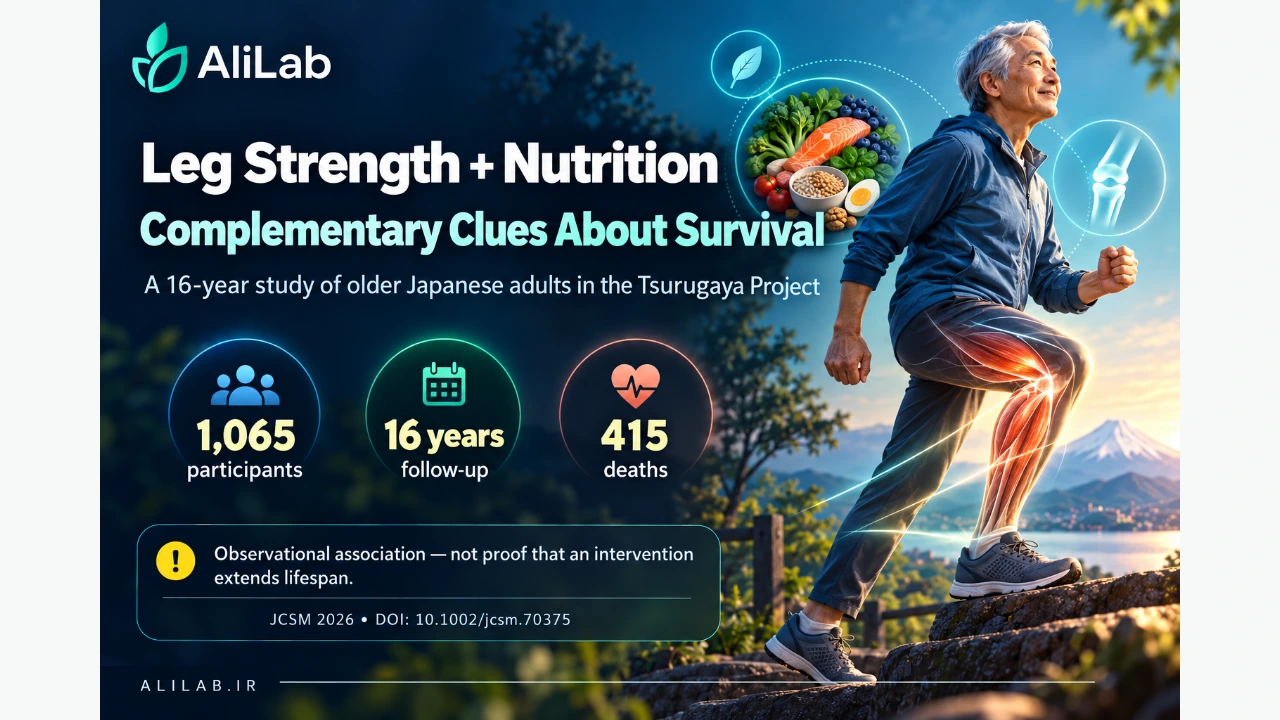
During follow-up, 415 participants died. Low leg-press strength and poor GNRI were each independently associated with higher all-cause mortality. Participants with both low strength and poor GNRI had an adjusted hazard ratio of 2.47 compared with those who had high strength and good GNRI. Combining the two measures also improved mortality risk stratification compared with either measure alone.
The findings suggest that muscle-strength assessment and nutritional assessment can provide complementary information in older adults. They do not prove that increasing leg strength or changing GNRI will itself extend life; intervention studies would be needed to establish a causal effect.
This observational study cannot establish causation. Strength and nutritional status were primarily measured at baseline and may have changed over 16 years. Cut-points for strength and GNRI were optimized within this dataset and may perform differently elsewhere. The cohort also consisted of older Japanese adults from one community.
The primary paper in the Journal of Cachexia, Sarcopenia and Muscle was checked directly. The sample size, 16-year follow-up, 415 deaths, and adjusted hazard ratio of 2.47 for the low-strength/poor-GNRI group match the published report. AliLab frames the result as prognostic association rather than proof that an intervention extends lifespan.
Discussion
Comments
Share your view on this research update.
Loading comments…