Greater leg strength and better nutritional status were linked to longer survival in older adults
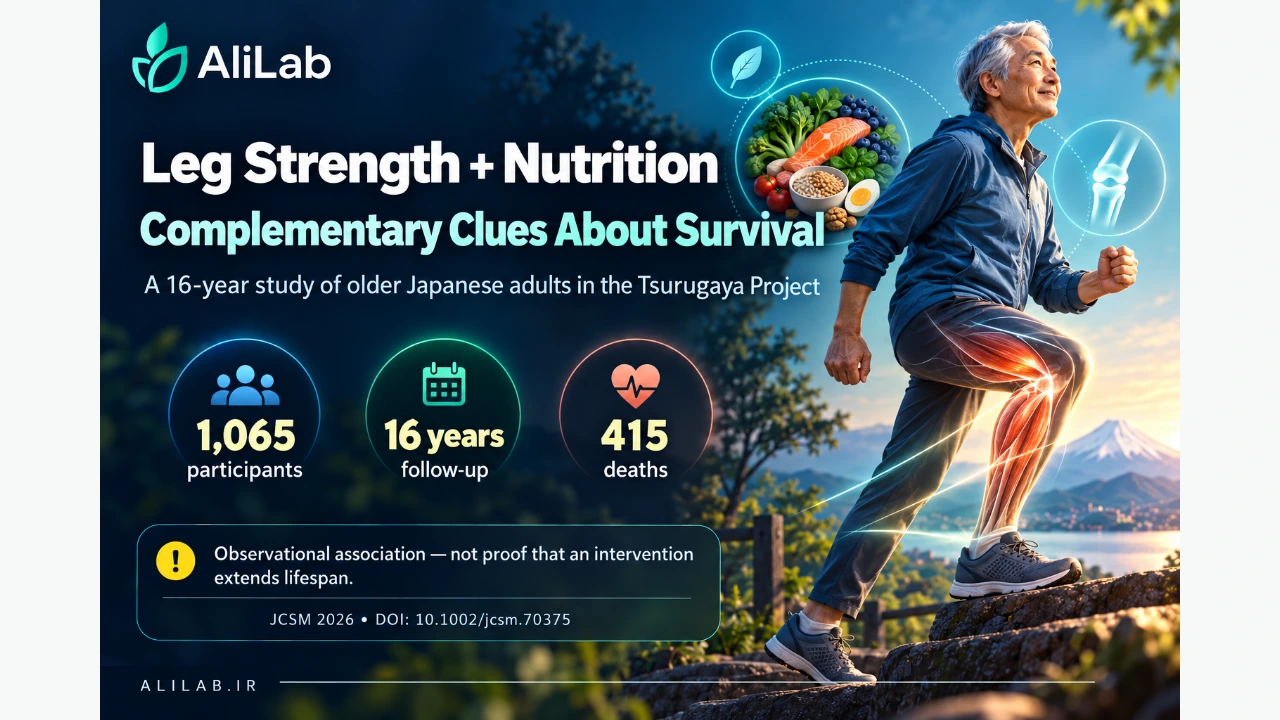
Researchers analyzed the Tsurugaya Project, a community-based geriatric cohort in Sendai, Japan. At baseline, 1,065 adults aged 70 years and older were assessed for directly measured leg-press strength and the Geriatric Nutritional Risk Index (GNRI), which combines serum albumin with body-weight information. All-cause mortality was then followed for 16 years.
Key finding: During follow-up, 415 participants died. Low leg-press strength and poor GNRI were each independently associated with higher all-cause mortality. Participants with both low strength and poor GNRI had an adjusted hazard ratio of 2.47 compared with those who had high strength and good GNRI. Combining the two measures also improved mortality risk stratification compared with either measure alone.