More REM sleep was linked to lower risk across dozens of diseases, but causation is unproven
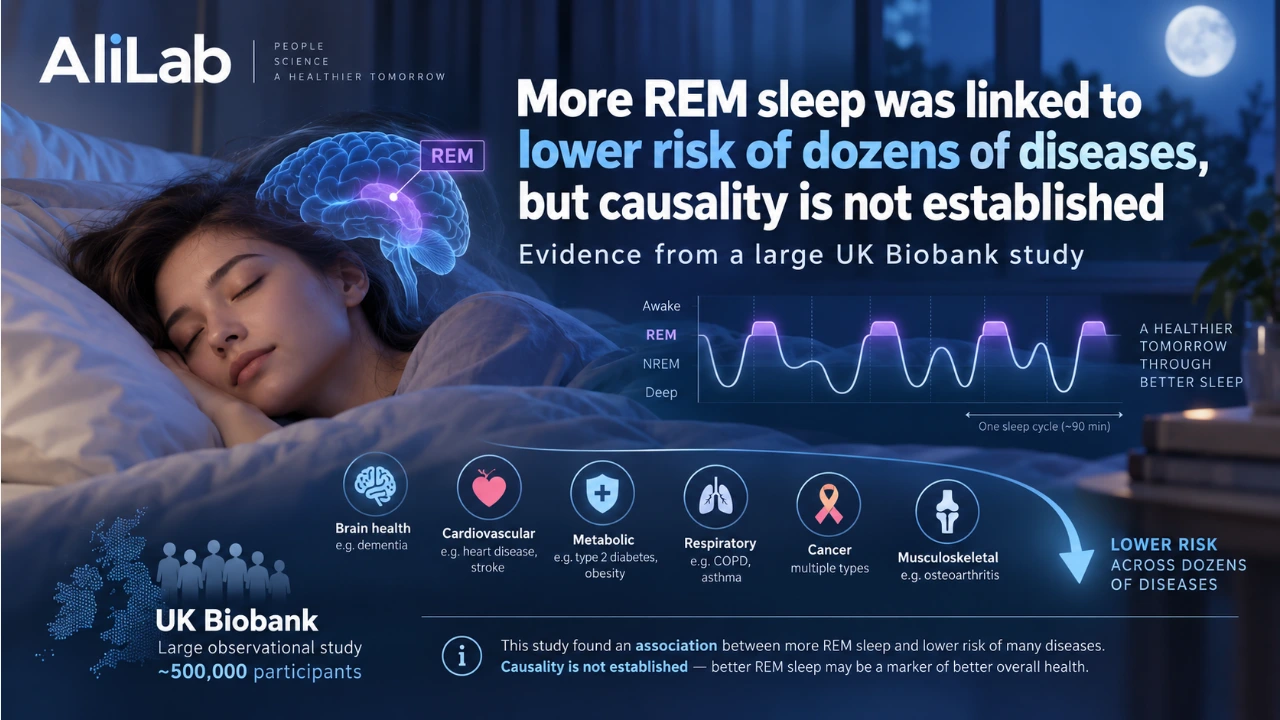
ScienceAlert highlighted a large PLOS Medicine study using wrist-accelerometer data from 95,559 UK Biobank participants. UK Biobank is a large UK research resource that follows volunteers' health data over time. Sleep stages were estimated with a deep-learning model, and participants were followed for a median of 8.9 years. Across more than a thousand health outcomes, a greater amount of REM sleep—the rapid-eye-movement stage often associated with vivid dreaming—was statistically associated with lower risk of 83 diseases.
Key finding: An interquartile-range increase in REM duration of about 47.6 minutes was associated with lower risk of a wide range of conditions, including heart failure, atrial fibrillation, dementias, and Alzheimer’s disease. Deep sleep was linked to lower risk of seven diseases. Sleep duration also showed nonlinear associations, with 6–8 hours corresponding to the lowest risk for many outcomes.