

This educational research summary does not replace individual medical or nutrition advice.
Original research title
Muscle Dysmorphia and the Use of Nutritional Ergogenic Supplements Among Amateur Male Bodybuilders: A Cross-Sectional Study
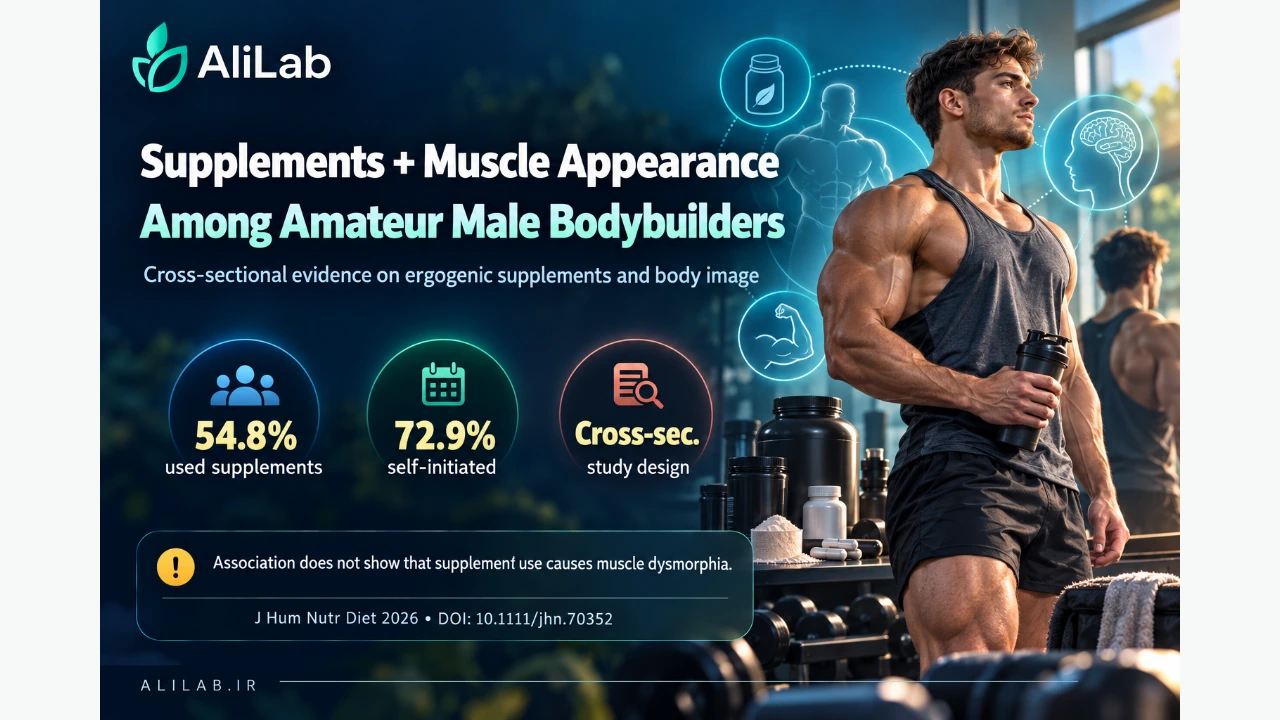
Overall, 54.8% of participants used ergogenic supplements, and 72.9% of users reported starting them on their own initiative. The total supplement-attitude score was positively correlated with the Muscle Appearance Satisfaction Scale and remained an independent statistical predictor in regression analysis. This does not mean supplements caused muscle dysmorphia.
For sports settings, the useful message is that supplement use and body-image attitudes may cluster together, while much supplement use may begin without professional guidance. Education about evidence quality, supplement safety, and healthy body image can therefore be relevant in sports-nutrition practice.
The cross-sectional design cannot establish direction or causality. Some data were self-reported and may be affected by reporting bias. The findings concern amateur male bodybuilders and may not generalize to women, professional athletes, or other sports. The sample size is not stated in the publicly indexed abstract.
The primary Journal of Human Nutrition and Dietetics paper was checked directly. The DOI, online publication date of 21 September 2026, and the 54.8% and 72.9% figures match the publisher's report. AliLab avoids claiming that supplements cause muscle dysmorphia because the study is cross-sectional.
Discussion
Comments
Share your view on this research update.
Loading comments…