

This educational research summary does not replace individual medical or nutrition advice.
Original research title
Applicability of Non-Invasive Eligibility Criteria for MASH Pharmacotherapy: A Multicentre Cohort Study
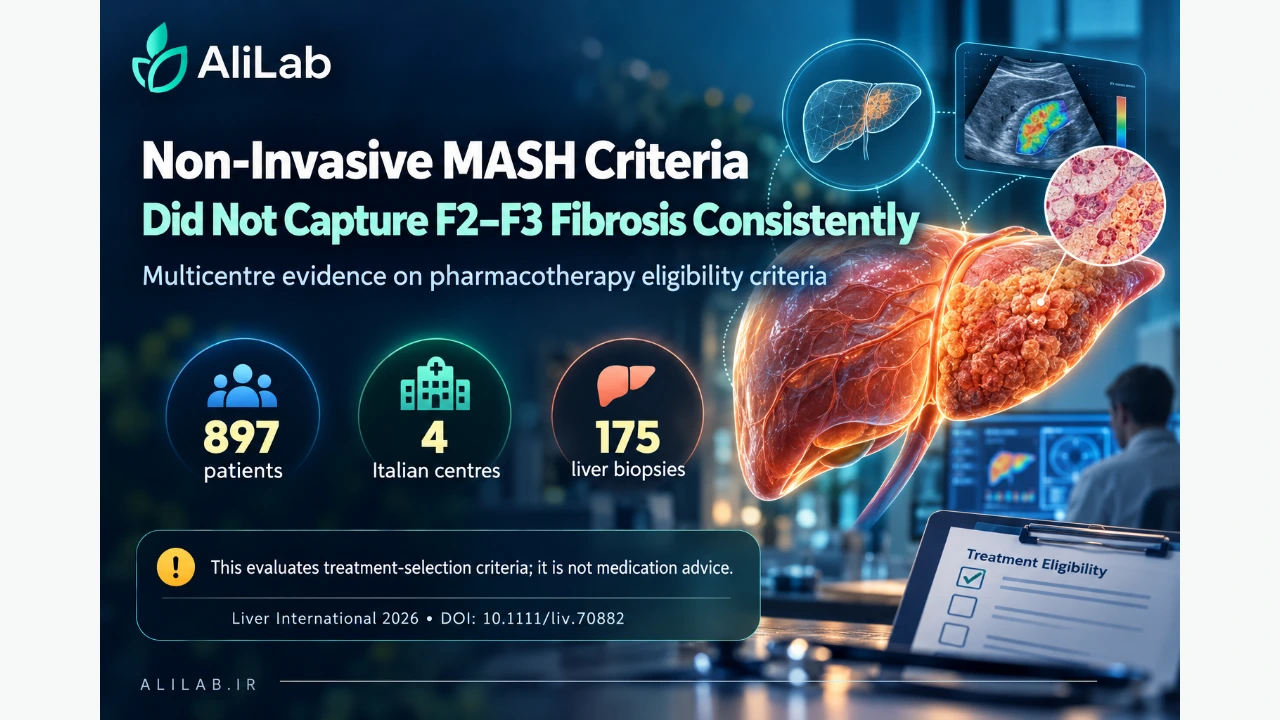
AASLD criteria classified 202 patients (22.5%) as eligible, while expert-panel criteria classified 114 (12.7%); only 86 patients met both sets. In the biopsy subgroup, 73 patients had F2–F3 fibrosis, yet 35 did not meet AASLD eligibility criteria and 49 did not meet the expert-panel criteria. Non-invasive eligibility therefore only partly aligned with histological fibrosis.
The study shows that treatment selection in MASH is not always captured by a single numerical threshold. Measures such as liver stiffness are valuable for reducing reliance on biopsy, but some patients may be classified differently from their histological fibrosis stage. Treatment decisions therefore need the broader clinical context and current guidance.
This was a retrospective study from specialist referral centres, so the cohort may not represent the broader MASLD population. Only 175 patients had biopsy close to the clinical assessment, limiting direct histological comparison to that subgroup. Treatment-eligibility frameworks may also change as therapies and guidelines evolve.
The Liver International primary paper and DOI 10.1111/liv.70882 were checked. The cohort size of 897, the 202 versus 114 eligibility counts, and the biopsy-subgroup findings among 73 patients with F2–F3 fibrosis match the published report. AliLab presents this as evidence about eligibility criteria, not as a recommendation to start or stop medication.
Discussion
Comments
Share your view on this research update.
Loading comments…