

This educational research summary does not replace individual medical or nutrition advice.
Science-news source: ScienceDaily
This diet may slow brain aging by 2.5 years
News publication date: October 1, 2026
News summary
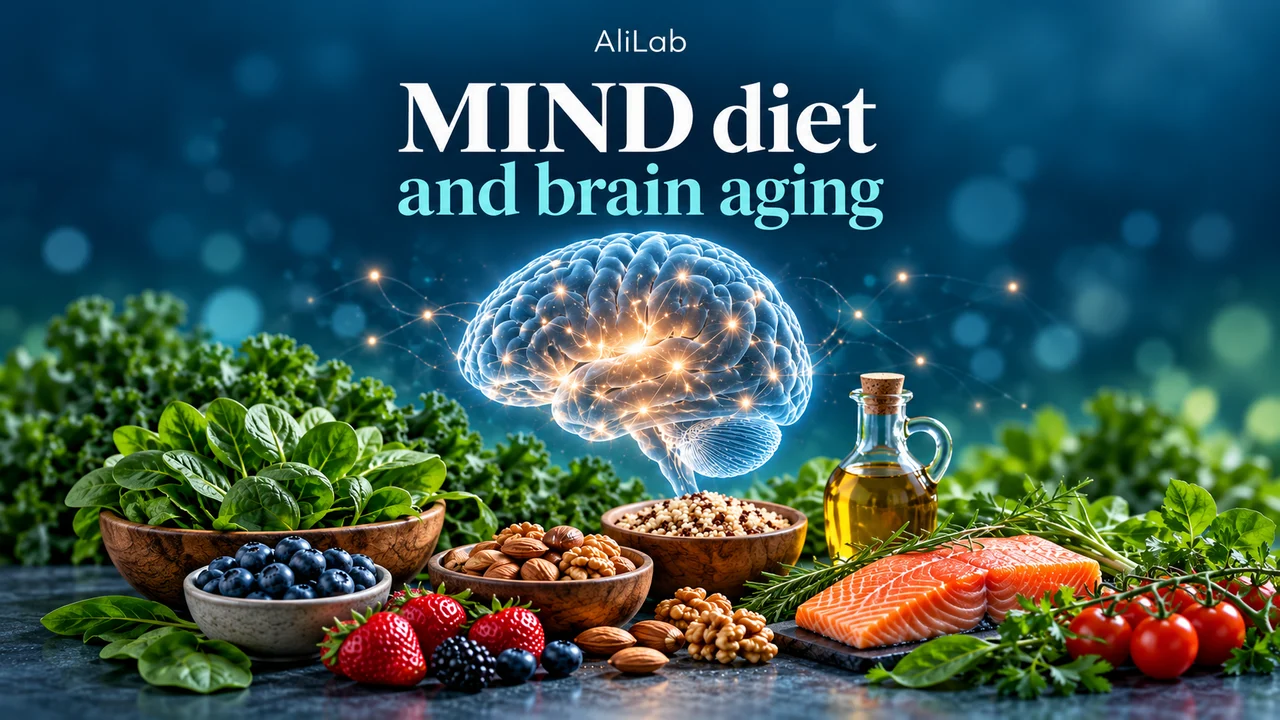
Could eating patterns be associated with brain changes during aging? ScienceDaily reported research on the Mediterranean–DASH Intervention for Neurodegenerative Delay, or MIND diet, which emphasizes vegetables, berries, nuts, beans, and fish. Among 1,647 middle-aged and older adults, greater adherence was linked to slower loss of brain gray matter. Researchers see potential for nutrition to support brain health, while the observational design cannot establish causation.
Original research title
Adherence to the MIND diet and longitudinal brain structural changes over a decade: evidence from the Framingham heart study offspring cohort
Over a median 12.3 years, each three-point higher MIND score was associated with 0.279 cm³/year slower gray-matter loss, a 20.1% attenuation of age-related change. The reported 2.5 years is a statistical age-equivalent for this structural measure, not individual brain rejuvenation. Lateral ventricular enlargement was also slower.
The finding supports further study of overall eating patterns. Outcomes were imaging measures, so the result does not establish prevention of Alzheimer’s disease or improved memory. Associations with individual foods should also be interpreted cautiously.
Residual lifestyle differences may contribute to the association. Food questionnaires depend on recall, while dietary changes and all genetic influences could not be addressed. Participants were predominantly White, limiting generalizability.
Discussion
Comments
Share your view on this research update.
Loading comments…